Iran’s Protests Explained: A Diary from Tehran
Amid the escalations by federal agents and the fear that looms heavy in the air in the Twin Cities, Minnesotans are showing up for their immigrant neighbors and each other in a multitude of ways, some old and some newfound.
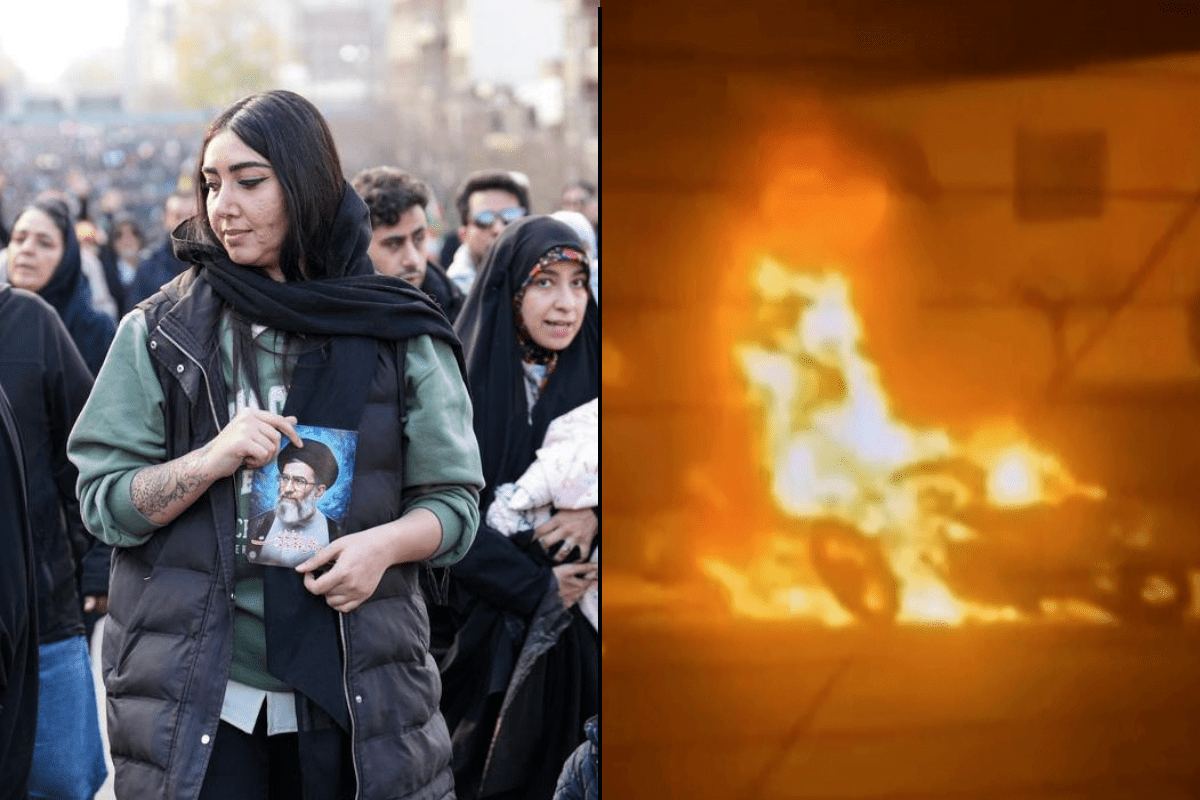
LEFT: Women at a pro-government rally in Tehran on January 12, 2026. Photo by Mehrdad Esfehani. RIGHT: This frame grab from a video released by Iran state TV shows vehicles burning amid night of mass protests in Tehran, Iran, Thursday, Jan. 8, 2026. Iran state TV via AP
I arrived in Tehran in December to take some time off from work and academic duties. We were all anticipating another U.S.-Israeli attack on the country. Instead, they diverted our legitimate protests against inflation towards a violent internal struggle, organizing and arming their native agents, hoping to topple the government and reduce Iran to a failed state.
This method had been carried out elsewhere in more vulnerable countries like Syria; but, no one had dared, or was so ambitious, to try it against a regional power like Iran. Yet, the U.S. and Israeli leaders, full of confidence from their wider decapitation campaigns in the Middle East, tried anyway. They failed. The events unfolded as follows.
On the morning of December 29, segments of Tehran’s bazaar—a major element of Iran’s economy—protested the rising inflation. Many closed their shops and assembled together in nearby streets. The inflation protests expanded beyond the bazaar and became a nationwide phenomenon.
Iranians have been struggling with inflation and declining purchasing power for several years now. But lately, it has become far worse. The Iranian currency, the rial, has fallen to a historic low. Since Iran’s economy is de facto dollarized, this means that the prices of goods and services increase when the value of the rial falls against the dollar. Prices have gone up 40 percent in the last year alone, and food prices are up 70 percent.
Iranians, who historically have a strong protest culture, came to the streets and demanded a more stable economy from their government. Others, following a long-standing protest tradition, took to their windows and balconies to shout anti-state slogans.
From December 29 to January 7, I did not witness too many protests as they were contained to specific neighborhoods; the ones I saw or heard about did not include the use of significant force by the police against the protestors. In most cases, the police were there to control crowds and ensure public safety. But, things changed rather dramatically on the night of January 8. The so-called crown prince, Reza Pahlavi, whose U.S.-backed father had been deposed in the 1979 Islamic Revolution, issued, from his home in the United States, a national call for protests to take place on January 8. That night, the protests turned violent, with armed groups coming onto the streets.
Iran is not a gun-friendly country; it is both difficult and illegal to obtain guns and in previous protests, the protestors did not have weapons. But, this time they did, and it appears that the U.S. and Israel, based on their own public admissions and the latest Iranian media and intelligence reports, made this possible. They organized armed groups to damage public properties, beat and kill police officers, and possibly shoot at protestors to foment chaos.
Iranians, unaffiliated with foreign intelligence, mainly younger and despaired by the lack of economic prospects, also began to riot, damaging or setting fire to public properties. The damage extended beyond governmental buildings to include social service infrastructure, such as mosques, firetrucks, and public transit.
On the night of January 8, the state mobilized more security forces in response to the changing situation. It also blocked internet access and mobile-to-mobile text messaging. Local websites and services, such as taxi and food delivery apps, remained functional. On January 9 and 10, it was also not possible to make phone calls at night. Those using Starlink satellite internet also experienced major signal disruption, which effectively eliminated their ability to upload photos and videos. The information blackout was justified to prevent armed groups from communicating with foreign intelligence; however, it also generated further fear among the population that the state would use the same powers to shut down communications, even in the absence of a national security emergency.
After January 8, seeing the violence, many of those protesting inflation went home. I spoke to Iranians from various walks of life, whom, despite their continued anger and despair over inflation, opposed rioting and destruction to common properties. However, some did stay on the streets as the armed activities continued. Because ordinary protestors and foreign-backed groups gathered at night in the same areas, in some places merging together, this had two predictable outcomes: the killing of some ordinary protestors by security forces, and the state being unable to isolate and neutralize the armed groups.
On January 12, many Iranians, refusing to be intimidated by the armed groups, marched against foreign intervention and in support of the government across Iran. I went to Tehran’s iconic Enghelab (or Revolution) Square to witness the march myself. Expectedly, the Western legacy media, including Piers Morgan, claimed the footage of the march was outdated or fake; yet, I saw large crowds marching on Revolution Street. The crowd was so massive that I could not enter the square and remained on the sidelines as a spectator. By the night of January 12, the riots and armed activities declined, and as of the date of this writing, the situation has stabilized. Text-to-text messaging has been restored but the internet remains shut off.
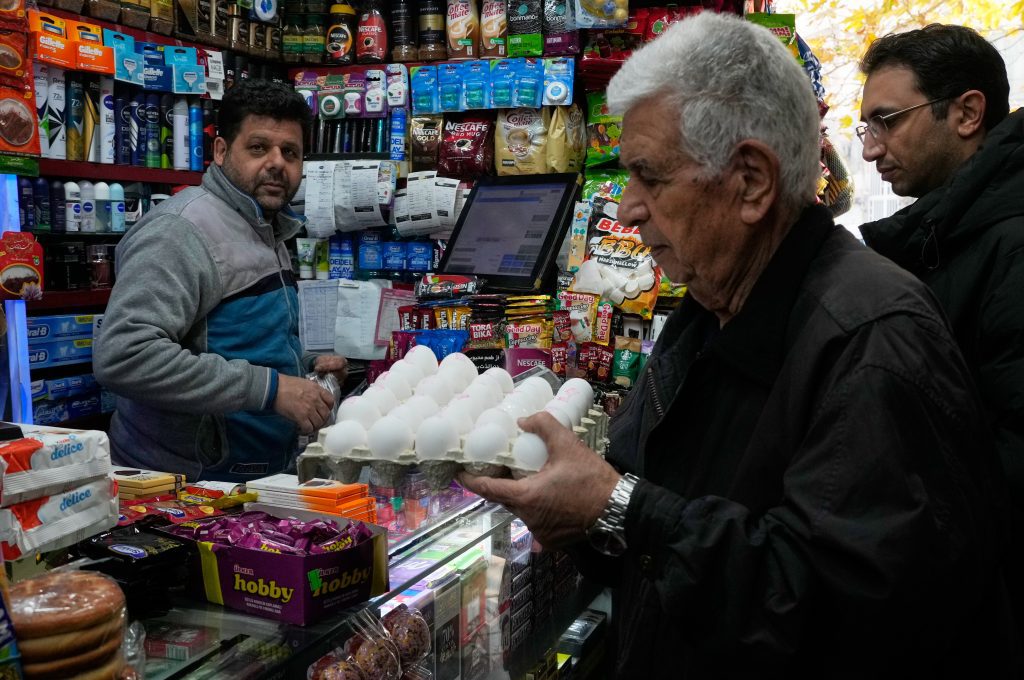
The Iranian government has announced some reforms in response to the inflation protests. The government of President Pezeshkian says it will target rentier corruption “once and for all,” and will divert government monies towards monthly payments to help with food essentials. This includes payments to all Iranians, regardless of income, of roughly $7 USD, with which one can buy 30 eggs, a liter of milk, a container of cheese and yogurt, and a few more items. Lower-income Iranians will receive additional monthly payments to help with the rising cost of living. However, if inflation keeps rising in the coming months, the government aid might prove ineffective and the protests may resurface again.
The U.S.-Israeli effort to transform inflation protests into prolonged civil unrest has failed for now, but it is clear they hope to turn Iran into a failed state, or even fracture and balkanize Iran, as the Wall Street Journal is now openly advocating. Economic warfare and sanctions have intensified civil unrest, but have not produced regime change; this means Washington might return to the military option. Many expect the Iranian state will be more prepared this time compared to the 12-Day War in June, which caught them by surprise as they were in the middle of indirect talks with the Trump administration. As the possibility of another war looms, the mood on the streets of Tehran is surprisingly calm and courageous. People complain about inflation frequently, but they rarely panic over foreign threats.