DRC Ebola outbreak: growing concerns over delayed response, health system stability
The most recent Ebola outbreak in the DRC and Uganda has sounded the alarm among health workers and activists, raising concerns about health system stability in the region.
#image_title
A recent Ebola outbreak in the Democratic Republic of the Congo and Uganda has raised serious concern among health workers and activists alike. The World Health Organization (WHO) declared the outbreak a public health emergency of international concern on May 17, and the number of suspected deaths had grown to over 220 by the end of the month. Hundreds of infections have been reported.
Caused by the Bundibugyo strain, this outbreak differs from more recent appearances of the disease in the region as there is no specific vaccine or treatment for this variety of virus. While the WHO is calling for more urgent research into targeted responses, for now the care pathway remains “general medical support,” public health expert Devi Sridhar wrote, “with death rates estimated at between 30% and 40% of those infected.”
Ebola is an extremely serious disease whose fatality has varied between 25-90% in previous outbreaks. It is transmitted through bodily fluids like blood and vomit: those in proximity of infected patients, like carers and health workers, are thus at high risk. The WHO and other global health organizations also emphasized that commonly used Ebola tests were unable to detect the Bundibugyo strain, delaying confirmation of the outbreak – and meaning the public health response has already lost precious time.
Read more: How commercialization and privatization deplete people’s health in Kenya’s urban settlements
Public health experts have also pointed out that the concerns surrounding the outbreak are not about it becoming a pandemic – “which is unlikely given how the Ebola virus spreads,” Sridhar wrote – but more about its potential to overwhelm health capacities in the DRC and neighboring countries if not contained. “In the 2014-2016 Ebola outbreak, more people died from malaria because the health system shut down than from Ebola itself,” wrote former director of the US Centers for Disease Control and Prevention (CDC) Tom Frieden. “The goal isn’t just stopping Ebola – it’s also keeping health systems from collapsing around it.”
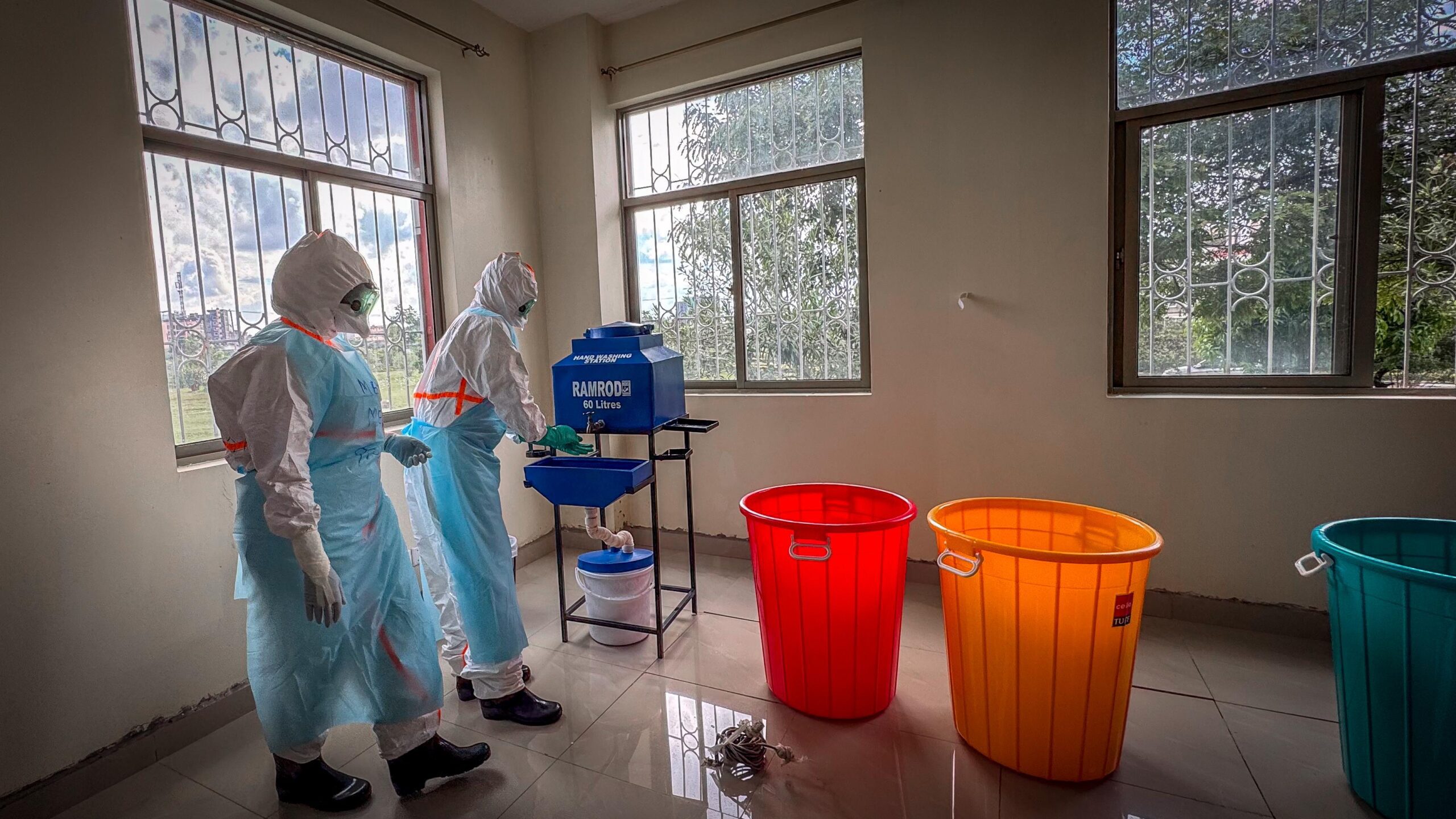
The situation is further complicated by ongoing fighting in the DRC and the lack of trust in institutionalized health services among parts of the population. WHO Director-General Dr. Tedros Adhanom Ghebreyesus appealed to groups involved in the conflicts to introduce a ceasefire and the population of Ituri province, where most cases are concentrated, to support the public health response, yet notable challenges on the ground persist. These include mobilizing local communities and ensuring health teams are fully equipped with necessary personal protective equipment (PPE). “Community engagement will be key,” the WHO wrote in one of its updates. “It is only when communities are engaged in the response that such outbreaks are brought under control.”
However, the responsibility is not all local – nor regional. The fragile state of the health system in the DRC, as in most African countries, stems from decades of colonization and underinvestment imposed through structural adjustment programs. These pre-existing conditions are now being exacerbated by cuts to global health funding – including the WHO’s own finances – and aid budgets, particularly during the second Trump administration. Since aid projects did not focus on building and strengthening local health systems, their abrupt end has meant diminished access to care for many, adding to the risks posed by the unfolding Ebola outbreak.
Read more: IMF loans continue to undermine health in Africa
The Trump administration has also implicated itself in conversations about the emergency by announcing it would offshore care for US citizens exposed to the virus to Kenya. The measure aligns with what Donald Trump had opined during previous Ebola outbreaks, insisting affected patients should be kept out of the US. Before the Kenya plan was announced, exposed US citizens were transferred to other countries, including the Czech Republic and Germany.
In response, networks including the People’s Health Movement (PHM) Kenya called for the strengthening of the country’s preventative capacities and addressing systemic weaknesses in health financing and delivery instead of jeopardizing biosecurity in the hope of receiving foreign aid. The group also pointed out the links between the most recent plans and health-related agreements signed with the US over the past decade.
PHM Kenya’s Dan Owalla told Peoples Dispatch these connections go back to a biosecurity agreement signed between Kenya and the US in 2015, which allowed the establishment of research and isolation centers for infectious diseases seen as biological threats. Together with more recent plans pursued under the America First Global Health Strategy, such agreements have paved the way for initiatives such as the Ebola facility, he added.
Read more: America First Global Health Strategy: a framework for co-opting healthcare in Africa?
The first news of such a plan led to a wave of criticism from Kenya’s healthcare trade unions and movements. The Kenya Medical Practitioners, Pharmacists and Dentists Union (KMPDU) warned that “while the Ministry of Health claims our local public facilities are too broke to function, it is actively facilitating the importation of a deadly hemorrhagic fever.”
“Our public hospitals are currently structurally crippled. We lack basic diagnostics reagents, essential medicines, and functional intensive care infrastructure. Yet, the government is stretching our already thin national security and public health surveillance mechanisms to accommodate a foreign-funded biohazard hub.”
“If the facility is built,” KMPDU insisted, “the Kenyan government must leverage this as a non-negotiable mandate to permanently employ the thousands of jobless Kenyan doctors and nurses into the public mainstream, fully funded by the state and the international partners pushing this deal.”
On Friday, May 29, a Kenyan court ordered a temporary halt to the US quarantine center plan. Despite the order, the Kenyan government reportedly continued to develop a roadmap together with US authorities. In response, hundreds of people took to the streets in Nanyuki in central Kenya on Monday, protesting against the initiative.
People’s Health Dispatch is a fortnightly bulletin published by the People’s Health Movement and Peoples Dispatch. For more articles and to subscribe to People’s Health Dispatch, click here.