Brazilian Supreme Federal Court Justice says Lula’s arrest was “one of the biggest miscarriages of justice in the country’s history”
STF justice overturns evidence from the Odebrecht Construction Company's leniency agreement in Operation Car Wash
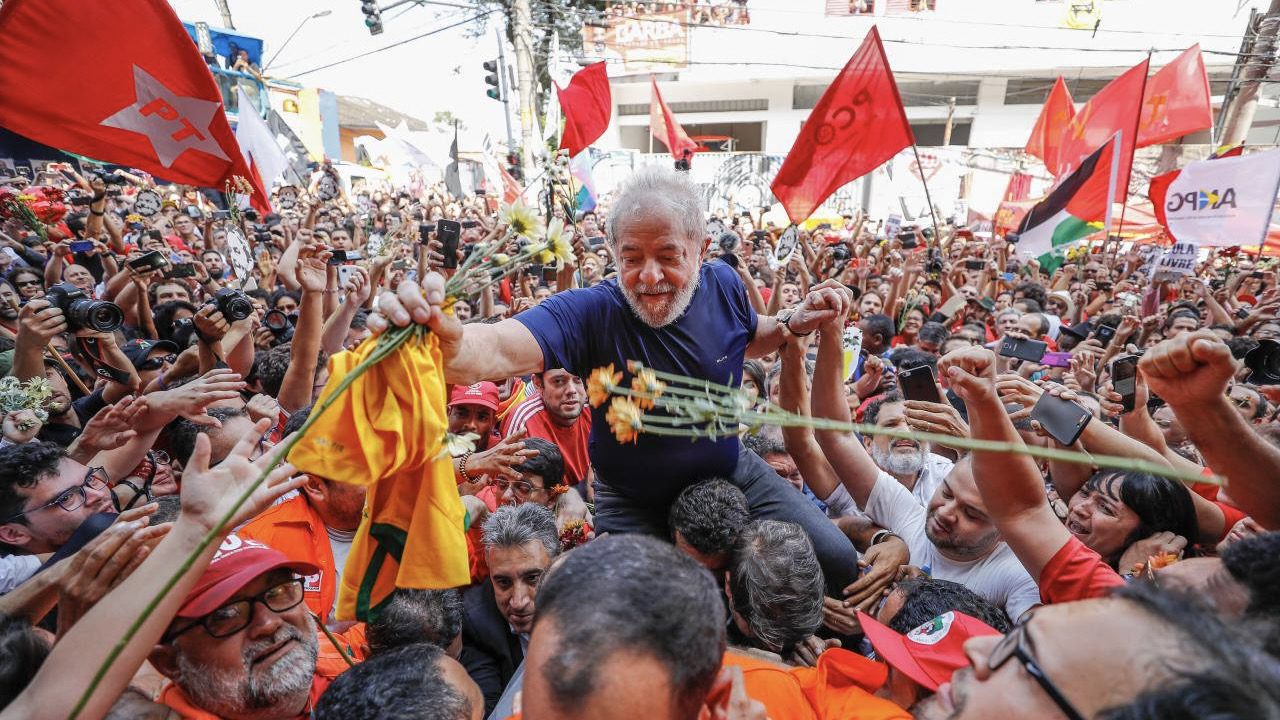
The imprisonment of now-president Luiz Inácio “Lula” da Silva was a “set-up” and “one of the biggest miscarriages of justice in the country’s history.” This is what Justice Dias Toffoli, of the Supreme Federal Court (STF), said when he annulled on September 6 all the evidence obtained through the Odebrecht Construction Company’s leniency agreement and the company’s bribery systems in the context of Operation Car Wash.
Toffoli’s decision was published in response to a request from Lula’s defense, which secured access to the files of “Operation Spoofing”, which investigated the hacking of the cell phones of former judge Sergio Moro and former federal prosecutor Deltan Dallagnol.
In the text in which he confirmed the annulment of the evidence, Toffoli said that Lula’s arrest was “the fruit of a power project by certain public agents in their goal of conquering the state by apparently legal means, but with methods and actions against legem [‘against the law’, in the Portuguese translation].”
In a forceful statement, the Supreme Court justice went on to say that the actions of the public agents that culminated in the arrest of the former president in April 2018 started the process that led the country to the recent threats of democratic rupture. Lula spent 580 days in prison in Curitiba, and was released after the Supreme Court’s decision to annul imprisonment after a second instance court decision.
“I say without fear of being wrong, [the arrest] was the real serpent’s egg of the attacks on democracy and institutions that were already foreshadowed in the actions and voices of these agents against the institutions and the STF itself. This egg was hatched by authorities who misused their functions, acting in collusion to target institutions, authorities, companies, and specific targets,” Toffoli wrote.
The minister also argued that there had been disrespect for due process of law and higher judicial decisions, forged evidence, actions with partiality and outside the sphere of competence of public agents, who, for him, “purposely did not distinguish innocent people from criminals.”
More than that, those involved used “real psychological torture, A 21st CENTURY PAU DE ARARA [torture method used during the Brazilian military dictatorship], to obtain ‘evidence’ against innocent people,” the minister wrote in capital letters.
In his 135-page decision, Toffoli published part of the leaked conversations involving agents such as Moro and Dallagnol. The minister acknowledged that the operation investigated “illicit acts that were truly committed, investigated and sanctioned,” but that it used the allegation of fighting corruption to “put a political leader behind bars, with partiality and in collusion, forging ‘evidence.'”
“In addition, by heterodox and illegal means, they targeted natural and legal persons, regardless of their guilt or not. And worse, they destroyed national technologies, companies, jobs, and public and private assets. They affected lives, taken by acquired tumors, strokes and heart attacks,” he said of the agents involved.
Moro speaks out
Sergio Moro, former judge in the Operation Car Wash case, took to social media to express his views. Without directly mentioning Toffoli’s decision, he said on X (formerly Twitter) that “criminals confessed and more than six billion reais were recovered for Petrobras.”
“This was the work of Lava Jato, within the law, with decisions confirmed for years by the Higher Courts. Brazilians saw it, supported it and know the truth. We respect the institutions and all our actions were legal. We will fight in the Senate for the right to the truth, for integrity and for democracy,” added the former Justice Minister of Jair Bolsonaro.
This article was written in Portuguese and originally published on Brasil de Fato.