Iran to hold indirect nuclear talks with the US in Oman, rejects Trump’s claims of direct negotiations
On Tuesday Iran held a second round of trilateral negotiation with Russia and China in Moscow, apparently to chart out a common position on nuclear and other international issues.
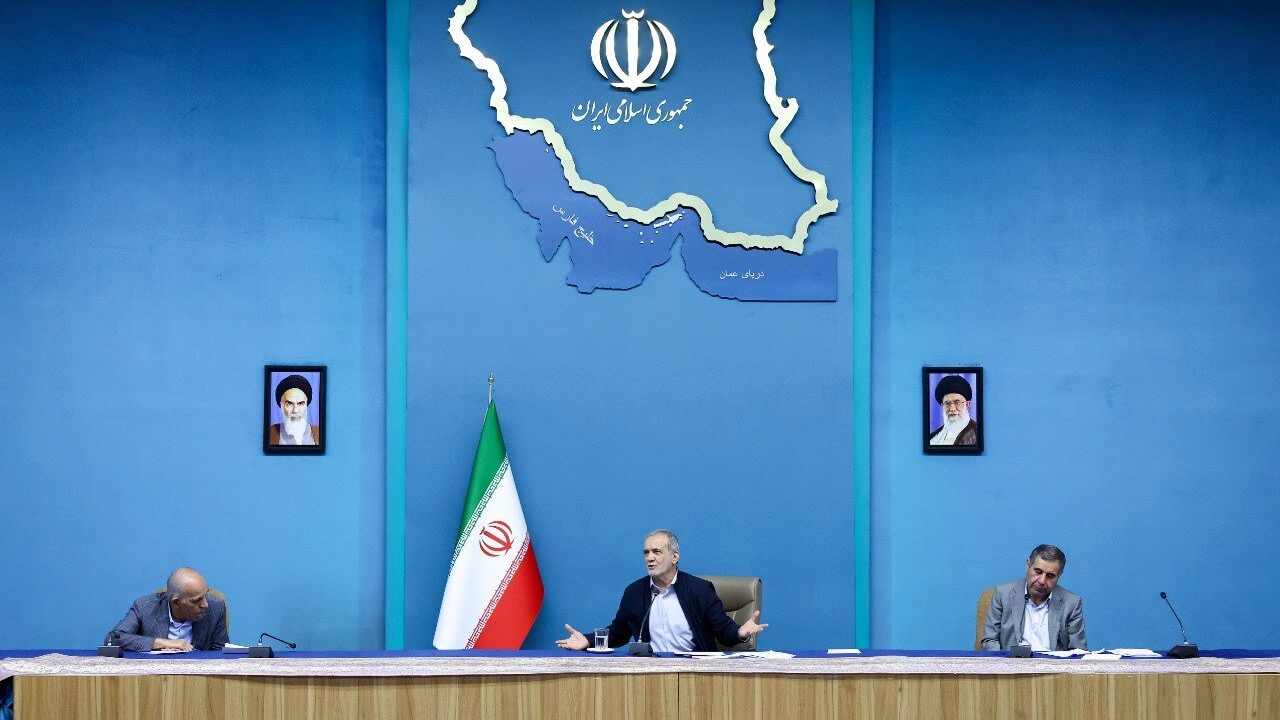
Iranian President Masoud Pezeshkian has issued a stark reminder: diplomacy does not equate to surrender, and trust cannot be restored through intimidation. Photo: Tehran Times
Iran will hold indirect talks with the US over the nuclear issue on Saturday in Oman, confirmed Iranian Foreign Minister Abbas Araghchi in a social media post on Tuesday, April 8.
“It is as much an opportunity as it is a test. The ball is in America’s court,” Araghchi said in a post on X.
Araghchi’s post refuted the claims made by US President Dona ld Trump on Monday. Trump claimed that Iran and the US had begun direct talks over the nuclear issue.
“We are having direct talks with Iran, and they have started. It will go on Saturday. We have a very big meeting and we will see what can happen,” Trump told press in the presence of Israeli Prime Minister Benjamin Netanyahu.
Trump and Netanyahu threaten Iran again
Trump, however, also repeated his threats of attacking Iran if it fails to agree to the terms set by the US over the nuclear issue. On Monday he said that “if the talks aren’t successful with Iran, I think Iran is going to be in great danger.”
Trump’s threats were repeated by Netanyahu as well. He claimed that irrespective of the results of the talk, Israel will make sure that Iran never gets nuclear weapons, hinting towards possible attacks on Iran’s nuclear facilities.
Iran has repeatedly denied that it wants to develop nuclear weapons claiming its nuclear program is completely peaceful. It has also repeatedly warned the US and Israel that any attack on its nuclear facilities represents a declaration of war against the country and will invite strong Iranian retaliation.
Netanyahu was hosted by Trump for the second time since the International Criminal Court (ICC) issued an arrest warrant against him for war crimes and crimes against humanity in Gaza in November last year.
Though the US is not a party of the ICC, various other leaders in the West, some of them signatories of the Rome statute, have said they will ignore the ICC warrant if Netanyahu decides to visit.
Read more: On International Quds Day, millions in Iran march in solidarity with Palestine
No direct talks under threats and intimidation
Earlier on Sunday, Iranian President Masoud Pezeshkian reiterated his country’s position that any direct talks with the US cannot be held under the threats of war and intimidation. Pezeshkian was referring to Trump’s so-called “maximum pressure campaign” and threats to bomb Iran made last month.
In March, Trump had sent a letter to Iran’s Supreme Leader Ayatollah Khamenei offering talks, but with a two-month ultimatum that threatened war if Iran did not comply.
Iran believes in negotiations, “we speak with the world, we speak with our neighbors, and we have improved those relations. But, the US is a different story,“ Pezeshkian told the press on Sunday in Tehran. “How can you negotiate with a country that applies maximum pressure and threatens us on a daily basis?” he asked.
Iran, Russia, and China coordinate ahead of nuclear talks
Meanwhile, on Tuesday Iran will hold a talk with Russia and China on the nuclear issue and other significant international developments in Moscow, Iranian Ambassador to Russia Kazem Jalali confirmed to IRNA on Monday.
The trilateral talks are part of a process initiated by the three countries to streamline their position on the issues of common concern in international forums, Jalali said.
The first round of the trilateral meeting over the nuclear issue was held on March 14 in Beijing where all three countries agreed on three common points.
They declared they wanted:
- an end to all unilateral sanctions imposed by the US
- acknowledgment of Iran’s right to a peaceful nuclear program
- a reaffirmation of their common faith in dialogue to resolve all significant issues
The talk in Beijing was attended by deputy foreign ministers of all three countries. The talks in Moscow will be conducted by the experts on the Joint Comprehensive Plan of Action (JCPOA) and the UN resolution 2231, Jalili said.
The UN resolution 2231 was adopted on the basis of the JCPOA in 2015 which lifted all international sanctions on Iran prior to the signing of the deal.
Both Russia and China are the signatories of JCPOA, along with Iran, the US, and its three European allies, the UK, France, and Germany. The US unilaterally withdrew from the deal in 2018 and imposed sanctions against Iran in violation of UN resolution 2231.