“Gangs don’t control areas in Port-au-Prince, they attack and leave,” says Haitian economist
Economist says UN statement is ”scaremongering” to pave the way for a new military intervention in the Caribbean country.
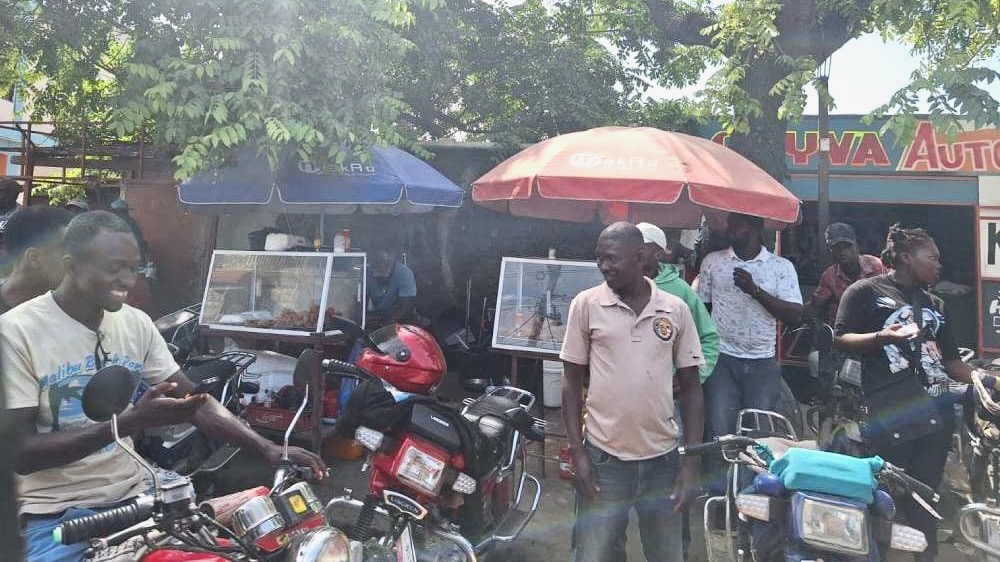
Everyday scene in Hinche, central Haiti. Photo: Rodrigo Durão/Brasil de Fato
The warning made by the United Nations (UN) last week that armed gangs have “almost total control” of the Haitian capital, Port-au-Prince, was met with skepticism by academic and resident Camille Chalmers. The economist told Brasil de Fato on Saturday, July 5, that the statement is alarmist and that a large part of the city’s residents have continued with their daily activities in recent weeks.
“It’s not true [that there is gang control], this statement was false alarmism and its objective is to pave the way for yet another military intervention,” accuses Chalmers. The country is currently hosting the Multinational Security Support mission in Haiti, approved at the end of last year by the UN Security Council.
“The government operates in the capital, I leave my house for my office every day and I have never been threatened. Of course there are problems, gang violence, but the country is not unviable,” he says.
Brasil de Fato reporters spent a week in three major regions of Haiti – North, Center and Northeast – and did not witness any violent incidents. On the contrary, they saw cities bustling with economic activity and people moving around.
The UN statement was made on Wednesday, July 2, by Ghada Fathy Waly, executive director of the United Nations Office on Drugs and Crime, to the organization’s Security Council. She stated that the authority of the state is increasingly diminishing and gangs are filling the governance vacuum.
Abandoned areas
Chalmers questions the statement. “Gangs do not govern; they are criminals who block roads and ask for bribes to allow them to pass. It is extortion, not government.”
The economist explains that one of the most erroneous points of the current narrative is that such gangs “control” areas. He reiterates – something that several people confirmed – that the gangs do not occupy, but only attack regions.
“It is possible that most of Port-au-Prince – but not even close to 90% – was attacked, but not occupied. These attacked regions are usually abandoned after the attacks,” says Camille Chambers.
“People are afraid to return to their homes, hence the large number of refugees, around 50% of the 3 million inhabitants.”
Haiti’s current crisis has been worsening since 2018 and worsened in 2024, with the resignation of Prime Minister Ariel Henry and the rise in power of armed gangs, which began to operate more freely, generating waves of kidnappings, robberies, and destruction, especially in the capital, Port-au-Prince. The Presidential Transitional Council (CPT) that has governed the country since mid-2024 took office with the mission of bringing more security and creating conditions for a new presidential election.
But the CPT has proven incapable of improving the country’s economic or social situation, which is facing widespread acute malnutrition, a lack of hospitals and drinking water, and a cholera outbreak.
This article was first published in Brasil de Fato in Portuguese.