Israel launches airstrikes on Syria as sectarian violence continues to spiral
Israeli warplanes launched an aerial raid on Damascus, and struck tanks of Syria’s army during sectarian clashes, ignoring a ceasefire on the ground and a US request to halt strikes on the country.
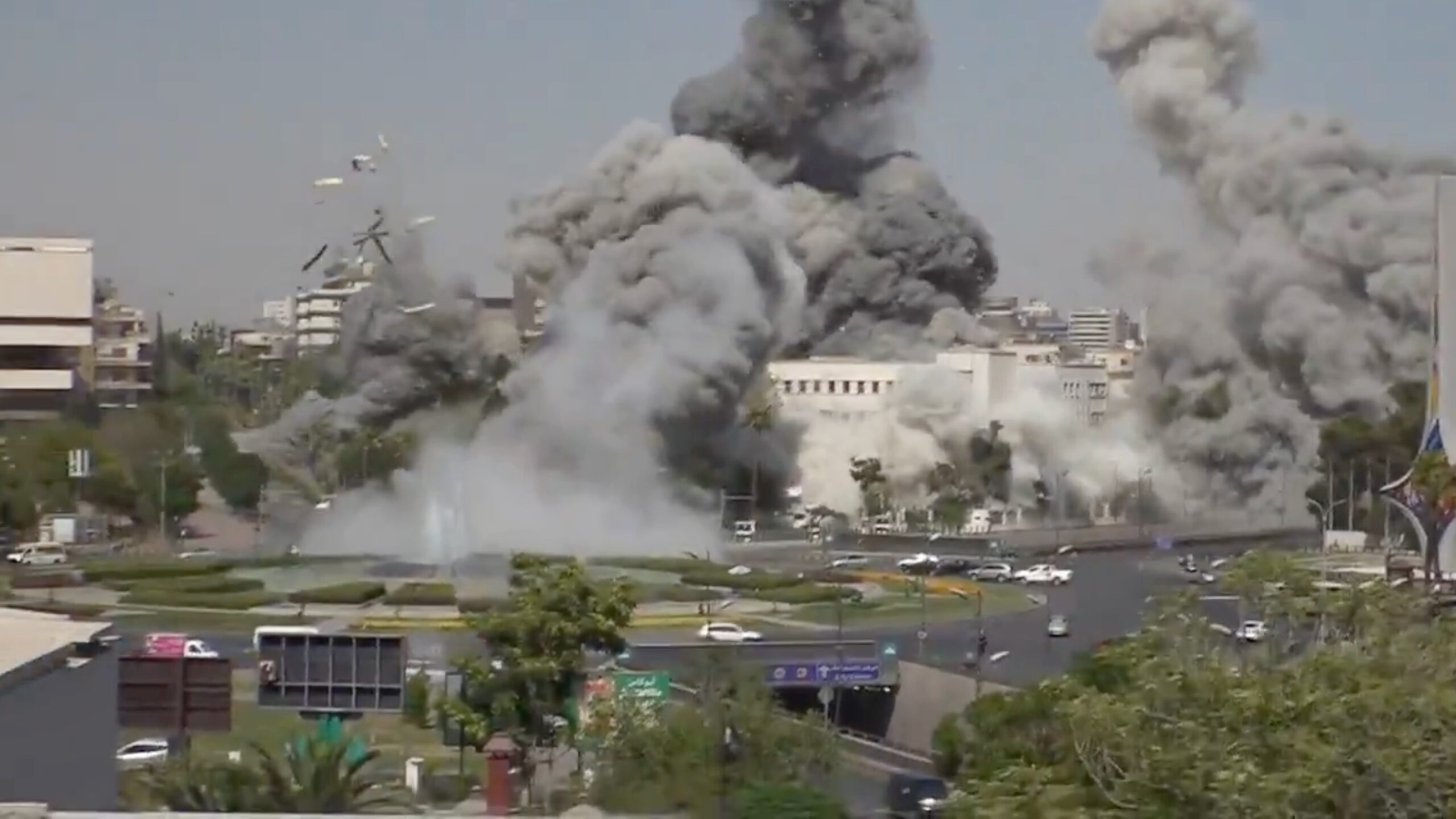
Israeli airstrikes on the Syrian Ministry of Defense on Wednesday, July 16. Photo: screenshot
In a major escalation, the IOF launched an aerial raid on Damascus Wednesday afternoon, targeting Syria’s Ministry of Defense, military headquarters, and presidential palace. Less than an hour later, Syria’s state-run media outlets reported that military sites across the southern governorate of Daraa were hit by Israeli warplanes.
Syrian media outlets also reported in the early hours of Wednesday, July 16, that Israel resumed its offensive on Suweida, targeting different parts of the governorate with airstrikes.
The assaults, which killed a number of people and injured several others, came hours after Israel allegedly agreed to a US request to halt attacks on Syria.
Escalating sectarian violence
Almost 170 people were killed in clashes that erupted on Sunday, July 13, and continued for more than two days between Druze fighters and Bedouin tribes in Syria’s southern governorate of Suweida, according to the Syrian Observatory for Human Rights.
Tit-for-tat kidnappings and attacks between members of the Sunni Bedouin tribes and Druze armed groups are believed to have triggered the latest clashes.
On Monday, July 14, the spokesperson for the Syrian Ministry of Defense, Hassan Abdul Ghani, announced that security reinforcements were deployed to Suweida to restore stability there.
Nevertheless, Israeli warplanes struck the tanks of the Syrian army before their arrival in the governorate. Israeli Defense Minister Israel Katz claimed that the attack was “a message and a clear warning to the Syrian regime. We will not allow harm to the Druze in Syria.”
Meanwhile, the Israeli Occupation Forces (IOF) claimed that the presence of tanks in southern Syria “may pose a threat to the State of Israel”, justifying its military actions inside Syrian territory.
It is worth noting that Israeli fighter jets struck an area near the presidential palace in the Syrian capital, Damascus, in May. The strike was allegedly carried out to warn the new Syrian government against harming the Druze population, in the wake of a previous bout of sectarian unrest in different areas inhabited by the Druze community, in Rural Damascus and Suweida, last April.
Yet, analysts argue that Israel is using the protection of the Druze as pretext for continuously breaching Syria’s sovereignty.
Clashes in Suweida seem to have continued after “fragile ceasefire”
On Tuesday, July 15, Syrian Minister of Defense Murhaf Abu Qasra announced a full ceasefire in Suweida on X, following an agreement with dignitaries of the governorate, noting that the government forces “will respond only to the sources of gunfire and deal with any targeting by outlaw groups.”
However, hours after the ceasefire was announced, renewed clashes erupted in Suweida as the deployment of Syria’s government troops sparked the ire of segments of the local population.
The spiritual leader of Syria’s Druze community Sheikh Hikmat al-Hijri also accused the Syrian government of coercing the Druze Spiritual Presidency to issue what he described as a “humiliating statement”, one day earlier.
Al-Hjiri said that pressure was exerted on the presidency by the al-Shara’a administration and an unnamed foreign power, to welcome the deployment of government forces and to call on the community’s armed groups to surrender their weapons.
The religious leader pointed out that although he had initially accepted the statement in order to stop the bloodshed, the government “broke their promise” and continued their “indiscriminate shelling against civilians.”
He further warned that the Druze community is “facing a campaign of total extermination”, and called for continued resistance against the government forces “by all possible means”.