Twenty years since Hurricane Katrina: a storm that exposed the system
From tens of thousands left abandoned to a militarized “looting” crackdown, Hurricane Katrina laid bare racial inequities and government neglect
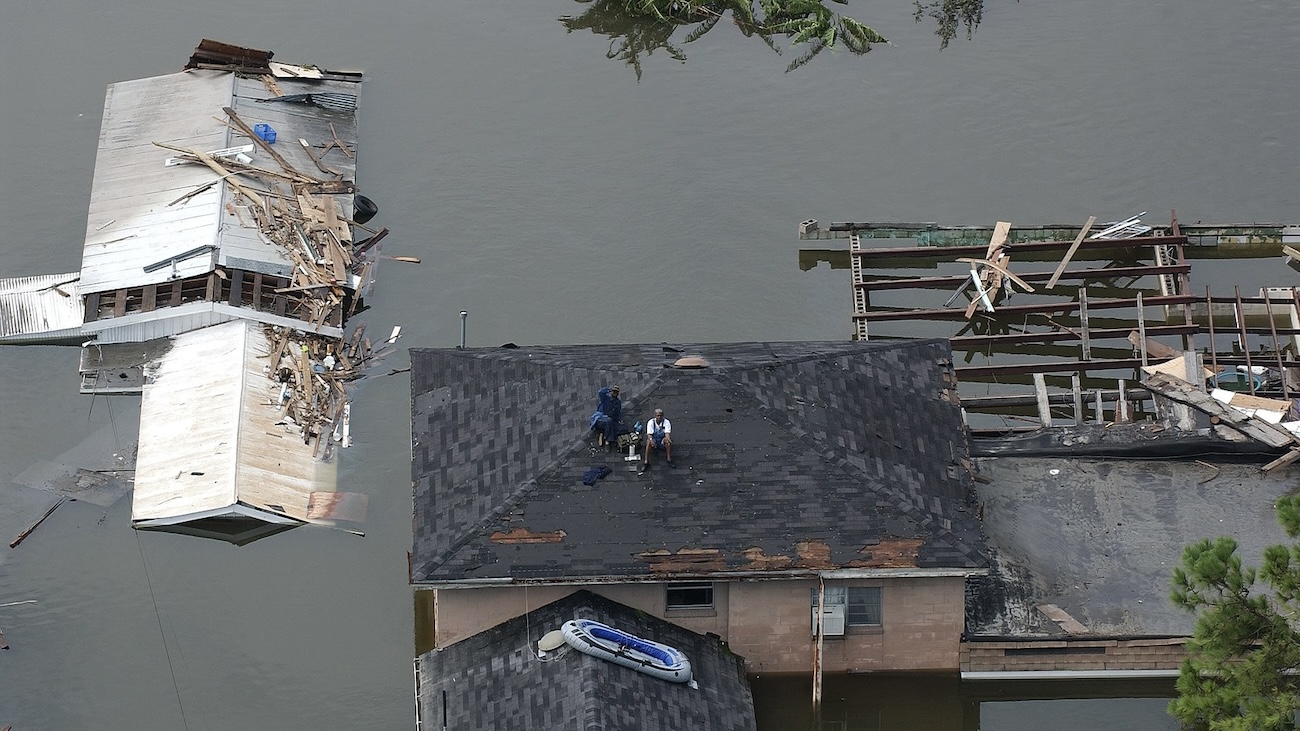
People sit on a roof waiting to be rescued after Hurricane Katrina. New Orleans is being evacuated as a result of flooding caused by Hurricane Katrina. Photo: Jocelyn Augustino/FEMA
August 29 marks 20 years since Hurricane Katrina made landfall in Louisiana and subsequently devastated the southeastern United States, resulting in 1,392 deaths and an estimated USD 125 billion in damages.
The imagery of the devastation and the subsequent government neglect shocked the world. Photos circulated of stranded residents, neighbors helping each other evacuate in the wake of the disorganized government response, and Hurricane survivors scrawling urgent messages on the streets or on the sides of their homes asking for food and water.
Katrina, as well as the events that unfolded in the aftermath, left a permanent mark on the United States. The storm exposed systemic government unpreparedness as well as how Black communities in the region were left to suffer the deepest losses, revealing the deadly cost of racial inequality in America.
“Two and a half months after the fact, and we’re still not able to get on the roads because there’s just muck still there. There’s no cleanup going on. And they’re preventing people from getting to their homes or what used to be their homes. I guess as a kid, I didn’t understand it.” remembers Katrina survivor Maryjo Tucker, who lived close outside of New Orleans with her family when the storm hit. “But as an adult, thinking back on it, I’m like, why? You see what is lost? Everything. People lost their lives and what little they can possibly salvage, you’re not even going to get that.”
The initial catastrophe
The catastrophic effects of Hurricane Katrina were not inevitable. On August 29, 2005, as Hurricane Katrina swept through, more than 50 levees and floodwalls protecting New Orleans and its suburbs failed. The levee failures left nearly all of New Orleans underwater — flooding 80% of the city and drowning the entirety of St. Bernard Parish. In New Orleans alone, the destruction was staggering: 134,000 homes, or seven out of every ten occupied dwellings, were damaged or destroyed by the storm and the flood born of system-wide failure.
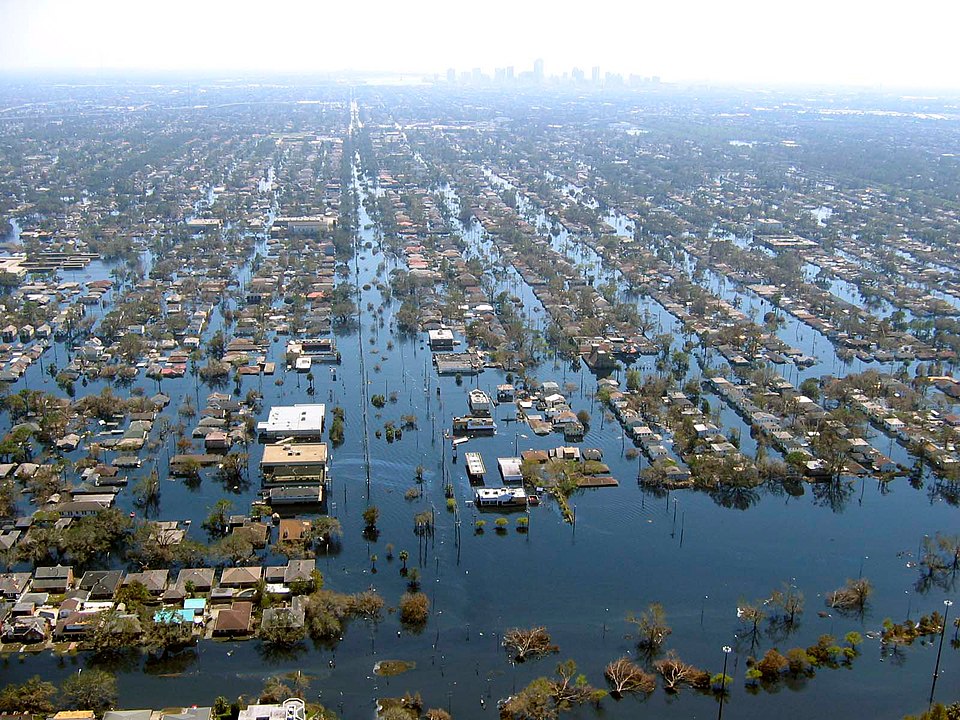 Flooding in New Orleans after levee failures during Hurricane Katrina, 2005 (Photo: NOAA)
“The catastrophic failure of New Orleans’s hurricane protection system represents one of the nation’s worst disasters ever,” reads a 2007 report by the American Society of Civil Engineers Hurricane Katrina External Review Panel. “The levees and floodwalls breached because of a combination of unfortunate choices and decisions, made over many years, at almost all levels of responsibility.”
According to the report, the levee breaches were caused mainly by flawed design, and to make matters worse, the pumps meant to drain the city didn’t work when they were most needed.
Thousands left abandoned
Katrina occurred during the Bush administration, at the height of the US invasion of Iraq. “But despite the heightened attention to homeland security, the response to Katrina was a failure,” writes Donald P. Moynihan, an Associate Professor and Associate Director of the La Follette School of Public Affairs.
“In particular, the Federal Emergency Management Agency (FEMA) had been weakened during the Bush administration,” Moynihan argues. “The DHS was also an untested organization, unsure of how to deploy its authority and resources. A key failing of DHS leadership was an inability to understand Katrina as an incident of national significance on par with 9/11. Instead, they responded as if it was a routine natural disaster until it was too late.”
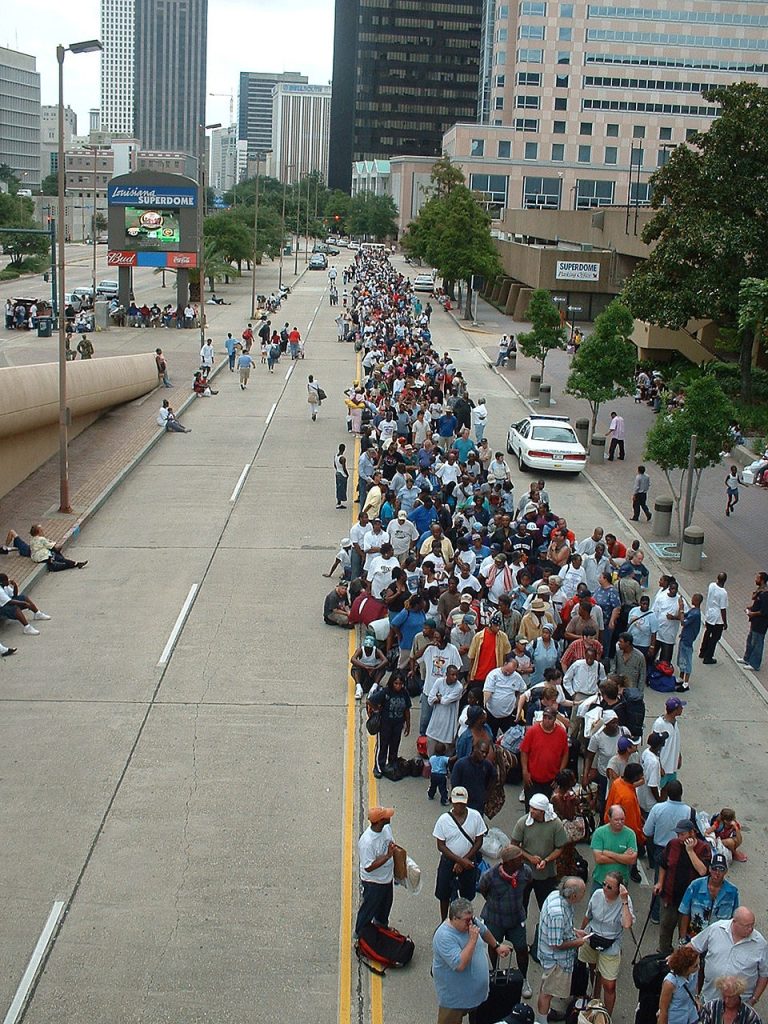 Ahead of Hurricane Katrina, residents with only a few belongings line up to enter the Superdome, opened as an emergency shelter. While most of the city has evacuated, those remaining often lack transportation or have special needs (Photo: Marty Bahamonde, FEMA)
FEMA’s unpreparedness was reflected early on in the disaster. Then-FEMA director Michael Brown sent his resignation to Bush after a stunning admission on television that he did not know that thousands of Katrina survivors were stranded at the Morial Convention Center in New Orleans.
Roughly 15,000 to 20,000 people ended up at the Convention Center after the storm, though it was never officially designated as a shelter. People were directed there by word-of-mouth after escaping flooded neighborhoods, expecting food, medical aid, and evacuation buses. Instead, they found no supplies or assistance for several days.
The Superdome, a multi-purpose stadium in New Orleans, became a so-called “shelter of last resort” following Katrina. Between 25,000 and 30,000 people seeking refuge within the Superdome encountered conditions of chaos and violence, with zero plumbing, limited power, a shredded roof due to the hurricane, and not nearly enough supplies for the influx of refugees.
At the Superdome, six people died during the days after Katrina: four from natural causes, one from a drug overdose, and one by suicide. Four bodies were recovered at the Convention Center, including one believed to be a homicide victim.
The “looting” crackdown, racism, and repression
Amid the lack of preparedness and the scramble for scarce resources, looting of stores became widespread following Katrina, especially in downtown New Orleans.
While relief efforts lagged behind, federal forces were quickly mobilized to enact a harsh crackdown on looting. Thousands of National Guard and federal troops poured into the city by September 2 and 3. “Three hundred of the Arkansas National Guard have landed in the city of New Orleans,” said then-Louisiana Governor Kathleen Blanco. “These troops are fresh back from Iraq, well trained, experienced, battle-tested and under my orders to restore order in the streets. They have M-16s and they are locked and loaded. These troops know how to shoot and kill and they are more than willing to do so if necessary and I expect they will.”
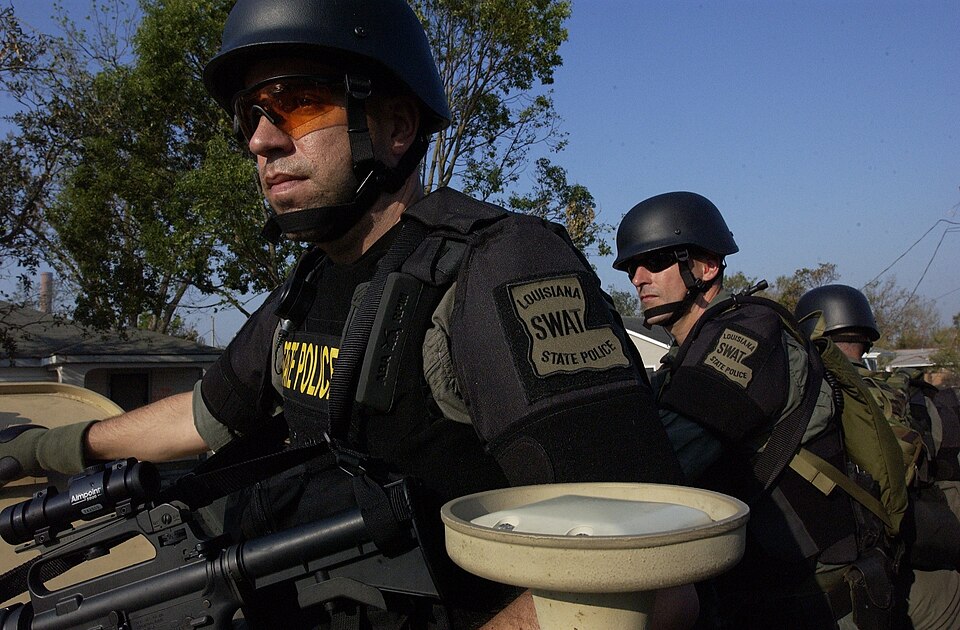 Louisiana State Police SWAT team on the ground in New Orleans following Katrina (Photo: Spc. Tanya Van Buskirk)
Ironically, law enforcement officials themselves admitted to engaging in looting. Plaquemines Parish Sheriff Jiff Hingle acknowledged that his deputies entered stores and took food, water, and medicine. An MSNBC report at the time showed police officers taking items from a Walmart alongside other residents. In the wake of the storm, the New Orleans police department investigated reports that at least 12 officers had gone on a looting spree.
Critics argue that sensationalist coverage of post-Katrina looting leaned on racist stereotypes of Black survivors, while the government’s militarized crackdown amounted to a violation of basic human rights.
20 years later: the “Katrina Declaration”
On August 25, more than 180 current and former FEMA employees, most signing anonymously, sent Congress a sharply worded letter, warning that the Trump administration’s policies are stripping the agency of its authority and capacity, unraveling two decades of progress made since the failures of Hurricane Katrina.
Titled the “Katrina Declaration,” the letter charges Trump and his Homeland Security Secretary Kristi Noem, whose department oversees FEMA, with weakening the agency’s disaster response capacity and installing unqualified leaders. The signatories urge that FEMA be insulated from political interference and that its staff be safeguarded against politically driven dismissals.
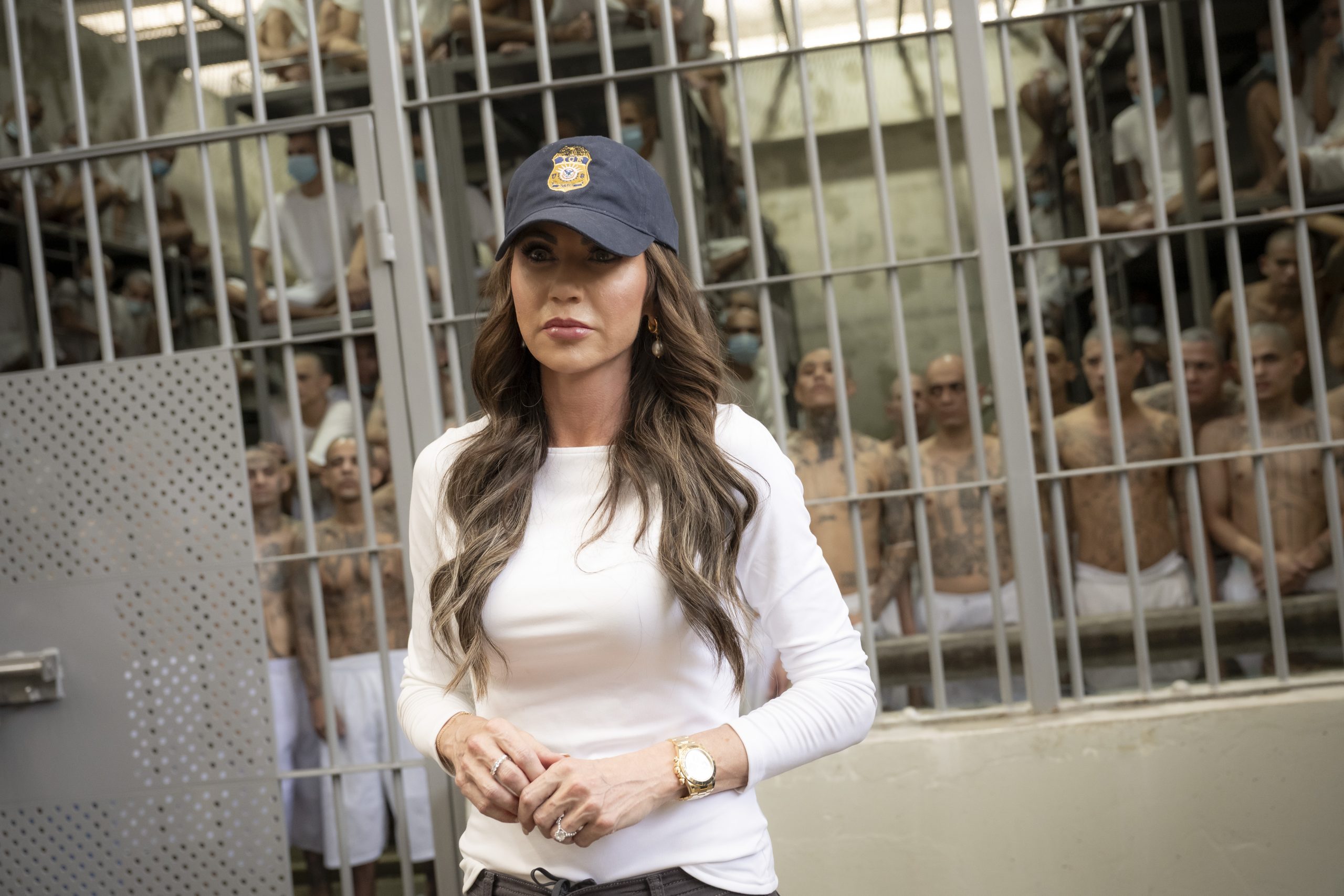 Department of Homeland Security Secretary Kristi Noem receives a tour of the notorious CECOT prison in El Salvador (DHS photo by Tia Dufour)
The signatories dedicated their letter to “every life lost from disasters,” “to the survivors who endured and rebuilt,” “to every first responder and public servant who places service above self,” and to “the federal partners who serve alongside us to deliver our mission.”