Israel escalates attacks on Syria as Al-Sharaa reports progress on a Syria-Israel security deal
Israel has always employed the “negotiations under fire” tactic to impose its conditions before reaching any agreement with other parties in the region.
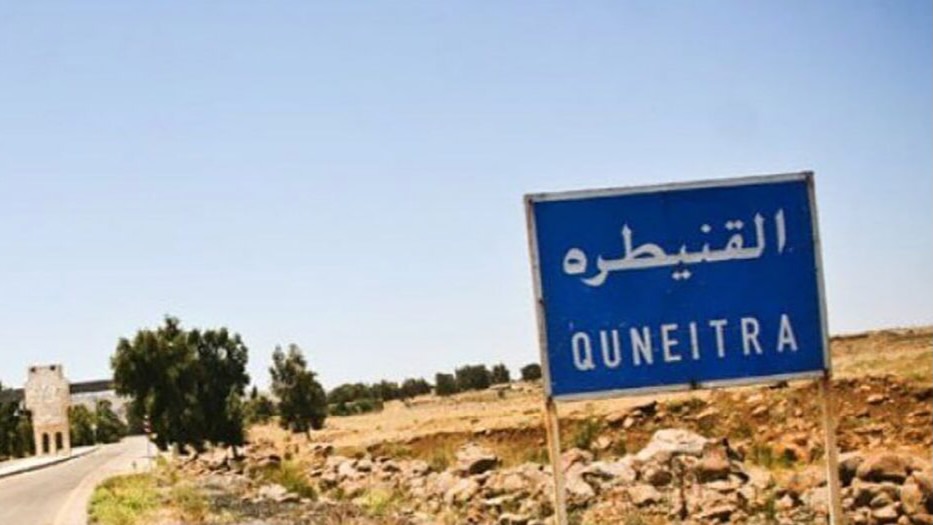
Israeli occupation launches incursions in areas of Damascus Countryside and Quneitra. Photo: Yemen Press Agency
The Israeli Occupation Forces (IOF) have intensified aerial attacks and expanded land incursions across Syria during the last few days. The attacks come in the wake of the announcement by Syria’s interim President Ahmad al-Sharaa on Sunday, August 24, that progress had been made on a possible security deal with Israel.
Syria TV quoted Al-Sharaa saying in a meeting with an Arab media delegation that there have been “advanced discussions on a possible security agreement between Damascus and Tel Aviv”.
Syria’s new ruler clarified to the delegation that “any understanding will be based on the 1974 truce line”, adding that he is open to taking “any agreement or decision that serves Syria’s and the region’s interests.”
Al-Sharaa’s remarks came less than one week after his Minister of Foreign Affairs and Expatriates, Asaad al-Shaibani, held a controversial US-mediated meeting with an Israeli delegation in the French capital, Paris. The move provoked backlash from the Arab grassroots, who considered it a step towards normalization with Israel.
Israel’s escalates its aggression on Syria while speaking of peace
Although Syria’s new government has repeatedly shown willingness to advance a peace process with Israel, Netanyahu’s government seems less eager to reciprocate the deal.
On Monday, August 25, Israel responded to Al-Sharaa’s enthusiastic remarks on a possible Syrian-Israeli security deal with multiple land incursions across the governorates of Rural Damascus and Quneitra.
According to the state-run Syrian Arab News Agency – SANA, an IOF unit consisting of 11 vehicles and over 60 soldiers advanced into the area between Beit Jinn and Beit Jinn Farm in western Rural Damascus, and seized control of Tal Bat al-Ward, a strategic hilltop at the foot of Mount Hermon.
Israeli soldiers are said to have opened fire towards civilians during the operation, with no casualties being reported. They also stormed several towns and villages in Quneitra countryside, where a number of houses were raided and searched before their withdrawal.
SANA pointed out that the IOF had carried out a similar military operation in the southern governorates of Quneitra and Daraa on Friday, August 22, during which they raided multiple towns, established checkpoints, and arrested several civilians.
It is worth noting that Israel has used the protection of the Druze, a religious minority, as pretext for continuously breaching Syria’s sovereignty since the fall of former Syrian President Bashar al-Assad.
Syria condemns the aggression, urges the UN to take “urgent and effective measures”
Syria’s Ministry of Foreign Affairs and Expatriates strongly condemned Israel’s aggression in a statement issued on Monday, calling it “a flagrant violation of the sovereignty and territorial integrity of the Syrian Arab Republic”.
The ministry considered the Israeli offensive a “dangerous escalation” that “constitutes a direct threat to regional peace and security”. It also warned that the continuation of such violations “undermines stability efforts and exacerbates tension in the region”.
The Syrian government called on the United Nations and the UN Security Council to “assume their legal and moral responsibilities”, and to take “urgent and effective measures to deter the occupation authorities from continuing with their aggressive practices, and ensure their accountability in accordance with the provisions of international law.”
Israel will not withdraw from Syria, says Katz
Israel’s Defense Minister, Israel Katz, responded to Syria’s condemnation statement in a post he wrote on X on Monday:
“The IDF will remain at the peak of Mount Hermon and in the security zone necessary to protect the Golan and Galilee settlements from threats looming from the Syrian side as the main lesson from the events of October 7.”
“We will continue to protect the Druze in Syria as well,” Katz added.
Israeli warplanes launched aerial raids on Syria after spying equipment was discovered
On Tuesday, August 26, Israel decided to further escalate its aggression with a series of drone strikes that targeted Syrian army positions near the city of Al-Kiswah, in Rural Damascus. At least six Syrian officers were killed in the assault.
Israeli warplanes targeted several sites in Al-Kiswah again on Wednesday, August 27, with no reports about casualties or the extent of damage that may have resulted from the attacks.
A Syrian official source informed SANA that the six Syrian officers were assassinated by Israel on Tuesday, while they were in the process of dismantling Israeli listening and spying devices, which they had earlier found near Al-Kiswah.
The official also clarified that Israeli warplanes launched several airstrikes on the site later to prevent Syrian forces from entering the area. The aerial raids were followed by an airborne landing of Israeli troops on Wednesday.
On Thursday, August 28, Israel confirmed that the IOF carried out the airborne landing operation in Al-Kiswah. However, it flipped the narrative by saying that its troops landed in the Syrian city to dismantle and recover “dangerous and secret” equipment that were implanted by Türkiye there to spy on Israel.
The unnamed Israeli official warned the Al-Sharaa administration against “playing with fire and listening to Turkish orders.”
Netanyahu says he would rather use military force in Syria because he “is not naive” amid continued land incursions
The discovery and recovery of the surveillance equipment does not seem to be the end of the Israeli aggression within the Syrian territories.
On Thursday, the IOF carried out a new land incursion in the central countryside of Quneitra and arrested two young men from the village of Ruwayhina, before taking them to an unknown destination.
That same day, Israeli Prime Minister Benjamin Netanyahu visited a war room set up by Israeli Druze in the village of Julis, in the northern territories occupied by Israel, to support the members of their religious sect in Syria.
During the visit, Netanyahu stated that he ordered the use of military force in Syria because he “is not a naive person” and he understands who the Israelis are dealing with, referring to Syria’s new rulers.
Boasting about his “negotiation under fire” tactic, the Israeli warmonger added: “I told President Trump: we both believe in the same idea, it’s called peace through strength. First comes strength, then comes peace. That’s how it is, certainly in our region, but not only here. But first and foremost, in our region.”