People’s Conference for Palestine draws 4,600, highlighting the strength of a growing movement
Thousands gathered in Detroit for the People’s Conference for Palestine, highlighting grassroots struggle, culture, and a unified call to end genocide in Gaza
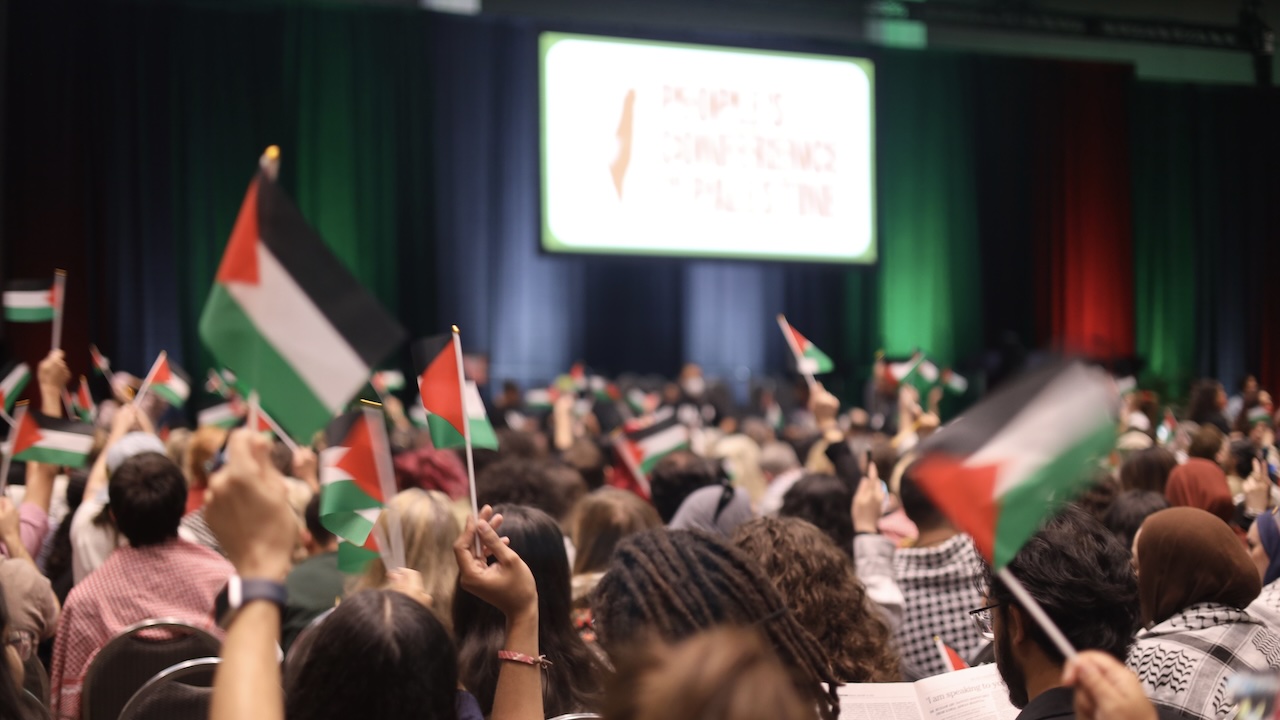
Photo via PC4P
Thousands of people came together in Detroit for the second annual People’s Conference for Palestine, held in Detroit, Michigan from August 29 to 31, for days of shared learning, strategic planning, and dedication to Palestinian liberation. Featured speakers during the three days of conference included labor activist Chris Smalls, Columbia student activist Mahmoud Kahlil, Imam Omar Suleiman, Representative Rashida Tlaib, the first Palestinian-American woman elected to Congress, alongside members of organizations such as the Palestinian Youth Movement (PYM). By the close of the gathering, nearly 4,600 people had registered to attend. The conference’s main hall was named after martyred Palestinian journalist Anas al-Sharif.
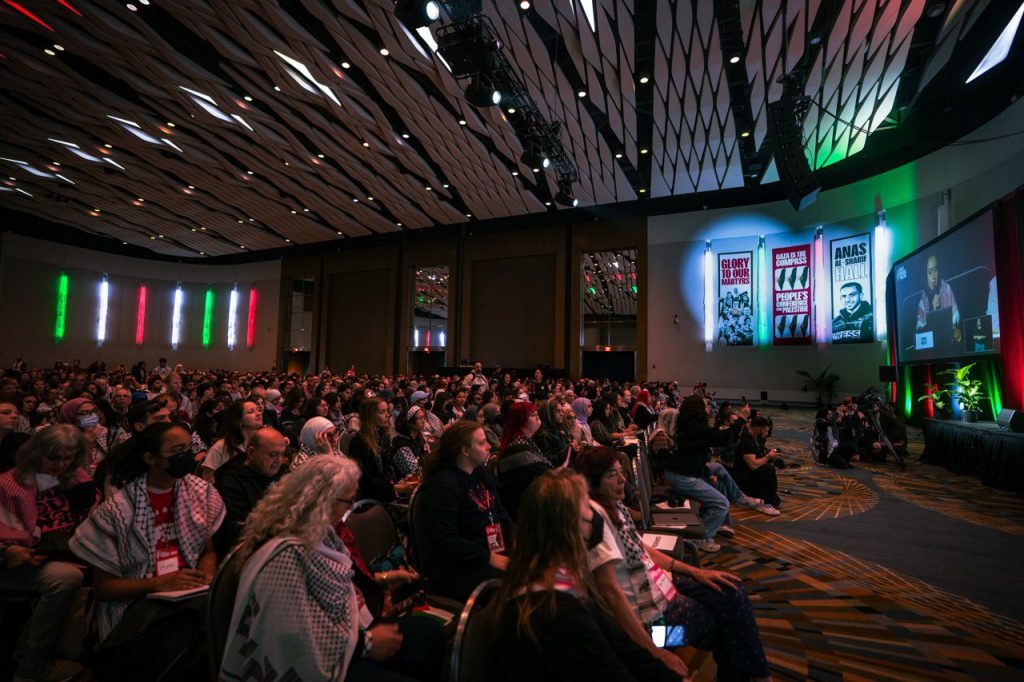 Attendees at the People’s Conference for Palestine (Photo via PC4P)
The struggle for Palestine in the United States
On the second day of the conference, August 30, several representatives of US-based organizations spoke in a workshop entitled “Unmasking Genocide enablers in the United States.” These organizations included Writers Against the War on Gaza (WAWOG), which announced a campaign against newspaper giant The New York Times, calling out the publication’s biased reporting on Israel’s war on Gaza. Among the demands of the campaign is one for the newspaper to retract an article published in December of 2023 titled “Screams Without Words”, which addressed claims of rape and sexual violence perpetrated by Palestinian resistance fighters. WAWOG labeled the article an “atrocity propaganda piece,” which was “dubbed the most dangerous piece of propaganda published since the Iraq War”.
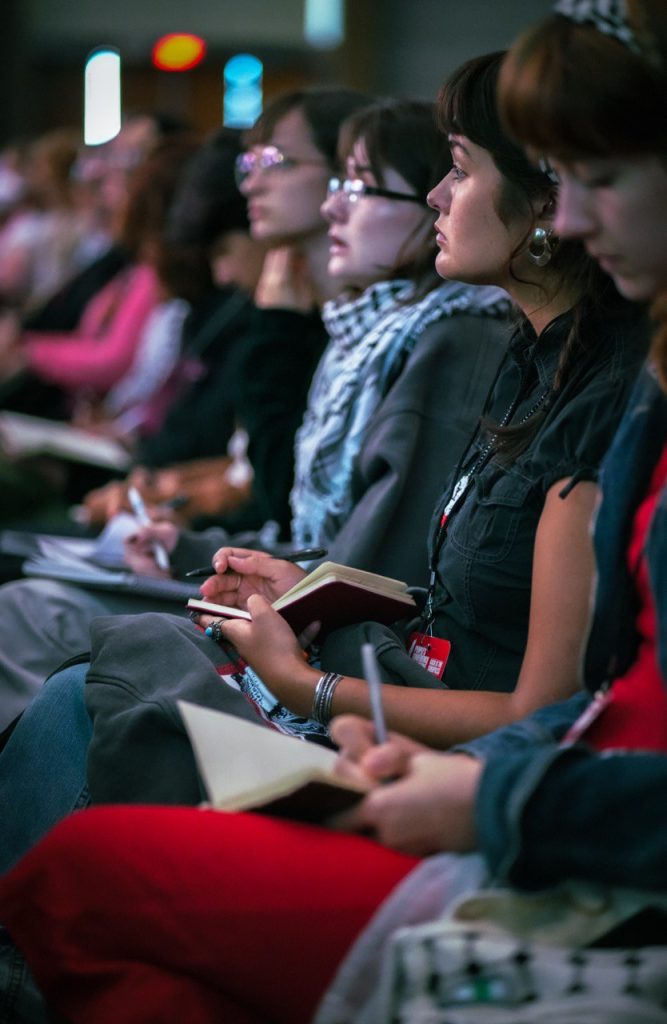 Attendees at the People’s Conference for Palestine (Photo via PC4P)
“Zionism was created on historical revisionism, on the rewriting of 2000 years of history, of the stories we were taught in school, the stories we are taught in cultural and media space, US media is where history is rewritten which allows the repetition of the worst kind of history,” said Sarah, a member of WAWOG.
Nora Barrows Friedman, a journalist with The Electronic Intifada, addressed the way that pro-Israel lobbying groups such as AIPAC are only one of many obstacles faced by the pro-Palestinian movement in the United States. “AIPAC is not omnipotent, it is not an eye of Solomon. It has weaknesses in us, who are not buying their sh-t, who are not going to vote for their politicians; and once we are done with AIPAC, we have to keep fighting, because the US is not going to change course on genocide in West Asia, or here in the US,” said Barrows Friedman.
Longtime activist Eugene Puryear, a journalist with BreakThrough News and a member of the ANSWER Coalition, spoke on the plenary “The Struggle Continues: The Fight for Palestine in North America” reflecting on the movement for Palestine in the United States and how to measure the progress of the mass movement. He stated, “In the context of where we’re trying to go, where we need to do, and measuring ourselves against the objective power of the imperial machine we are up against, we have created a mass movement that is reaching into all of the key areas of social power that we would need to move to be able to not just change that apparatus, but in fact to transform it and overthrow it.”
The student movement one year after the encampments
Students active in the movement for Palestine in college campuses across the US also spoke on the state of the student struggle a year after the wave of Gaza solidarity encampments took the world by storm. “The increased coordination across the student movement is a very historic step for the Palestine Solidarity Movement here in North America,” said Yara, an organizer with National Students for Justice in Palestine, on the second day of the conference. “SJP chapters are becoming a prominent presence on their campuses that cannot be ignored by their peers or their administrations and they are offering an alternative model to education and political thought through radical and principled study. They are exposing criminal and morally corrupt systems on university campuses.”
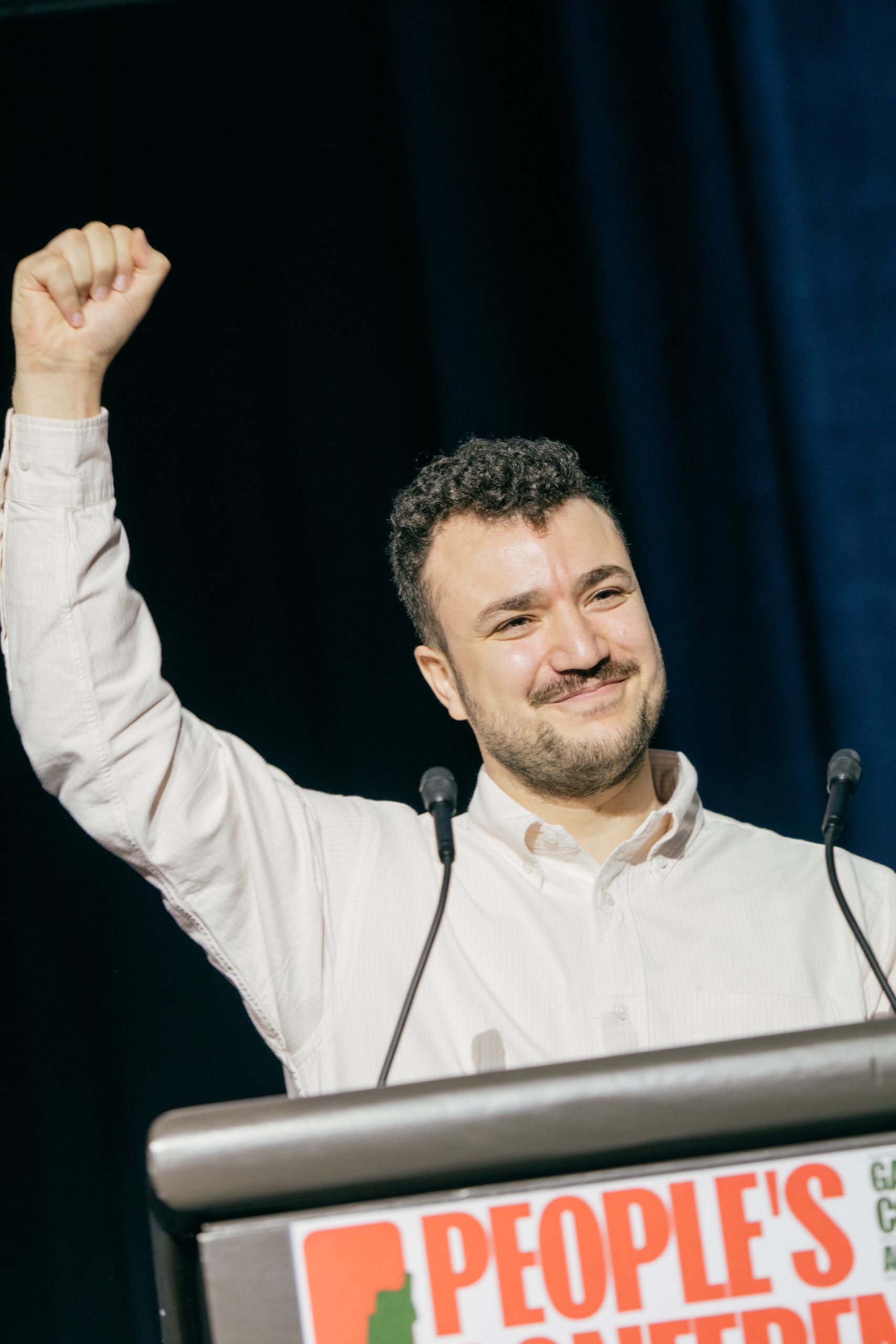 Mahmoud Khalil speaks at the second day of the People’s Conference for Palestine (Photo: Jaylen Strong)
Columbia graduate and leader in the Gaza solidarity encampment, Mahmoud Khalil, who was held in ICE detention for months by the Trump administration, also spoke at the conference on the second day.
“The Palestinian liberation movement is winning,” Khalil declared, addressing a crowd of thousands. “The fact that I was targeted by the highest officials and levels of this country means that we are winning.”
Doctors declare: “Fighting genocide is medicine”
Panels throughout the day featured healthcare workers, legal experts, and community organizers sharing their experiences over the past two years and outlining the path forward toward a Gaza free from genocide and siege.
A panel of medical workers described Israel’s police against Gaza as a “policy against life”.
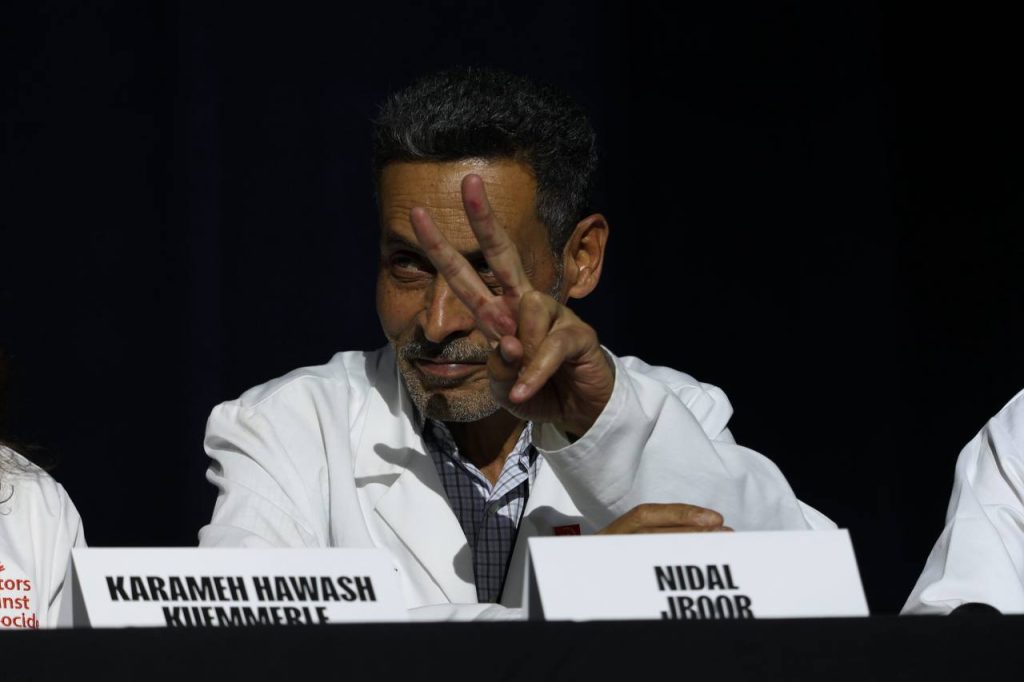 Dr. Nidal Jboor addresses People’s Conference for Palestine (Photo via PC4P)
“Fighting genocide is medicine. Liberation is medicine. If we honor our oath, we must be first to resist structures that are anti-life – whether the child is in Detroit, Congo, Sudan, or Gaza,” said Dr. Nidal Jboor, a founding member of Doctors Against Genocide. In May, Jboor was arrested inside a US congressional building while holding a sign reading “Let the children eat. Let the children live,” during Secretary of State Marco Rubio’s testimony before the Senate Foreign Relations Committee.
“Genocide is a medical emergency with a known pathophysiology – dehumanization, segregation, starvation, extermination. Apathy and impunity feed it; clinicians must name it and organize against it,” said Dr. Karameh Hawash-Kuemmerle, also a founding member of Doctors Against Genocide.
Rashida Tlaib challenges Congress and AIPAC
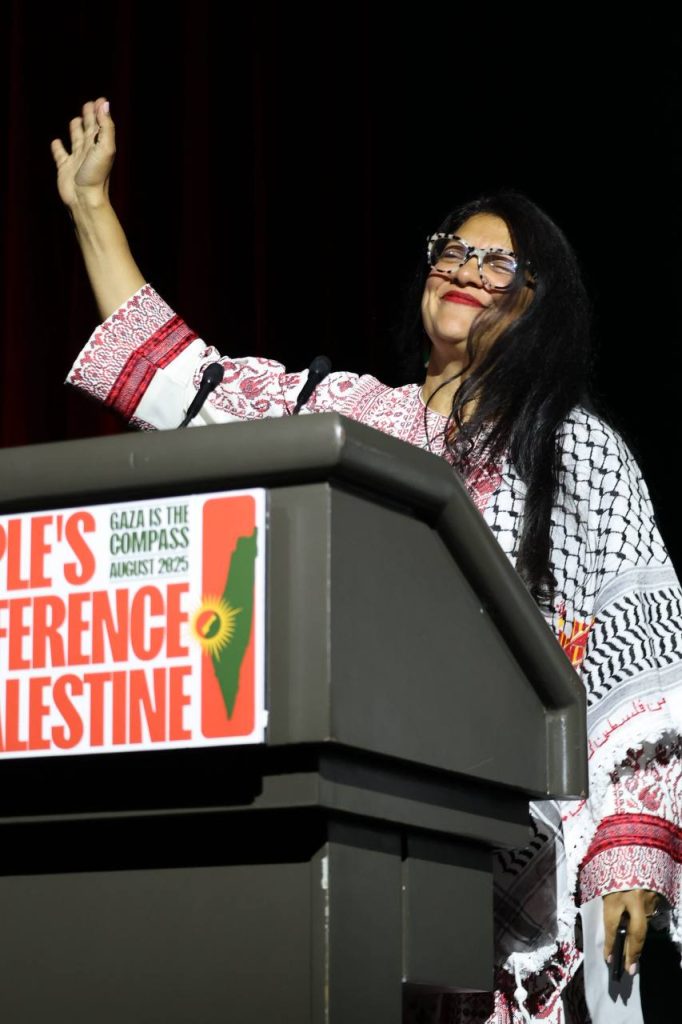 Congressmember Rashida Tlaib addresses crowd (Photo via PC4P)
The final day of the conference began with opening remarks from Imam Omar Suleiman, the founding director of MUHSEN, a nonprofit dedicated to supporting individuals and families with special needs in Muslim communities. This was followed by a keynote conversation with Belal Mohammed, the first fighter of Palestinian descent to win a UFC world title, and Congresswoman Rashida Tlaib.
“I want to say to all of them, every genocide enabler, look at this room motherf-ckers, we ain’t going anywhere!” said Tlaib, to the applause of thousands gathered in the main auditorium, recounting the decades of attempts to ethnically cleanse Palestinians.
In speaking of the legacy of grassroots struggle in Detroit, a historic hub of both the Civil Rights and labor movements, Tlaib said that the city “will remind me constantly… that it’s not the genocide-enabling Congress or the White House that will free our people… It can only be us.” Tlaib also announced the launch of a new petition to kick AIPAC out of US politics.
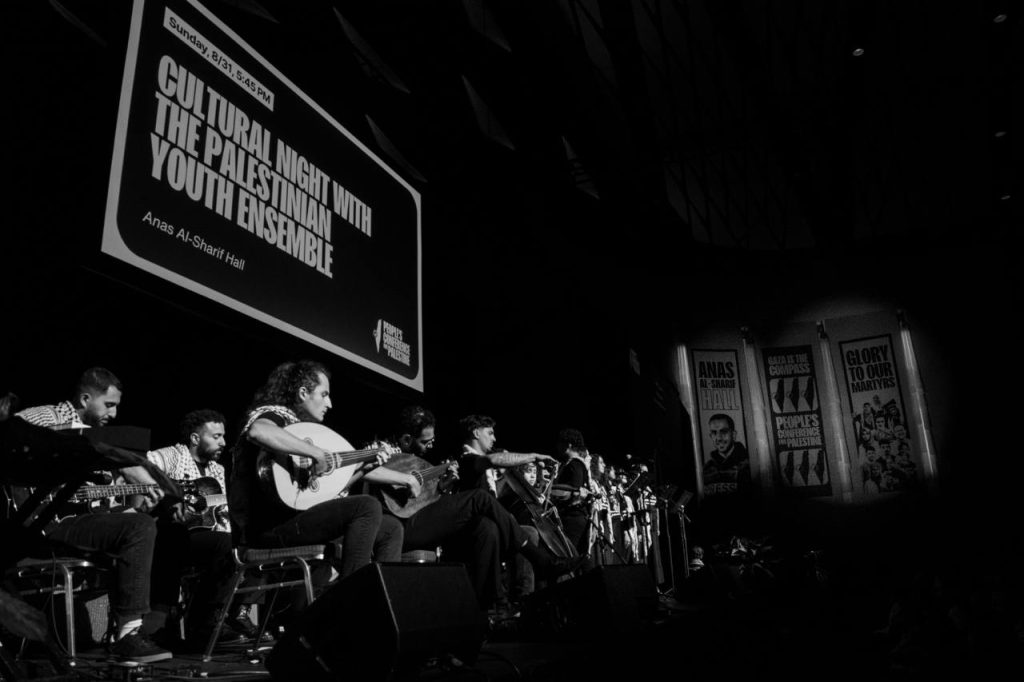 Cultural performances conclude the People’s Conference for Palestine (Photo via PC4P)
The conference also included a special Children’s Program, where the acclaimed El Funoun Palestinian Dance Troupe taught young participants the traditional dabke. The conference concluded with a vibrant culture night, featuring the Palestinian Youth Ensemble performing nationalist music to an energized audience.