Catherine Connolly elected president of Ireland, brings hope for solidarity and unity
Progressive Catherine Connolly’s victory in Ireland brings hope for stronger action on social justice, reunification, and solidarity with Palestine.
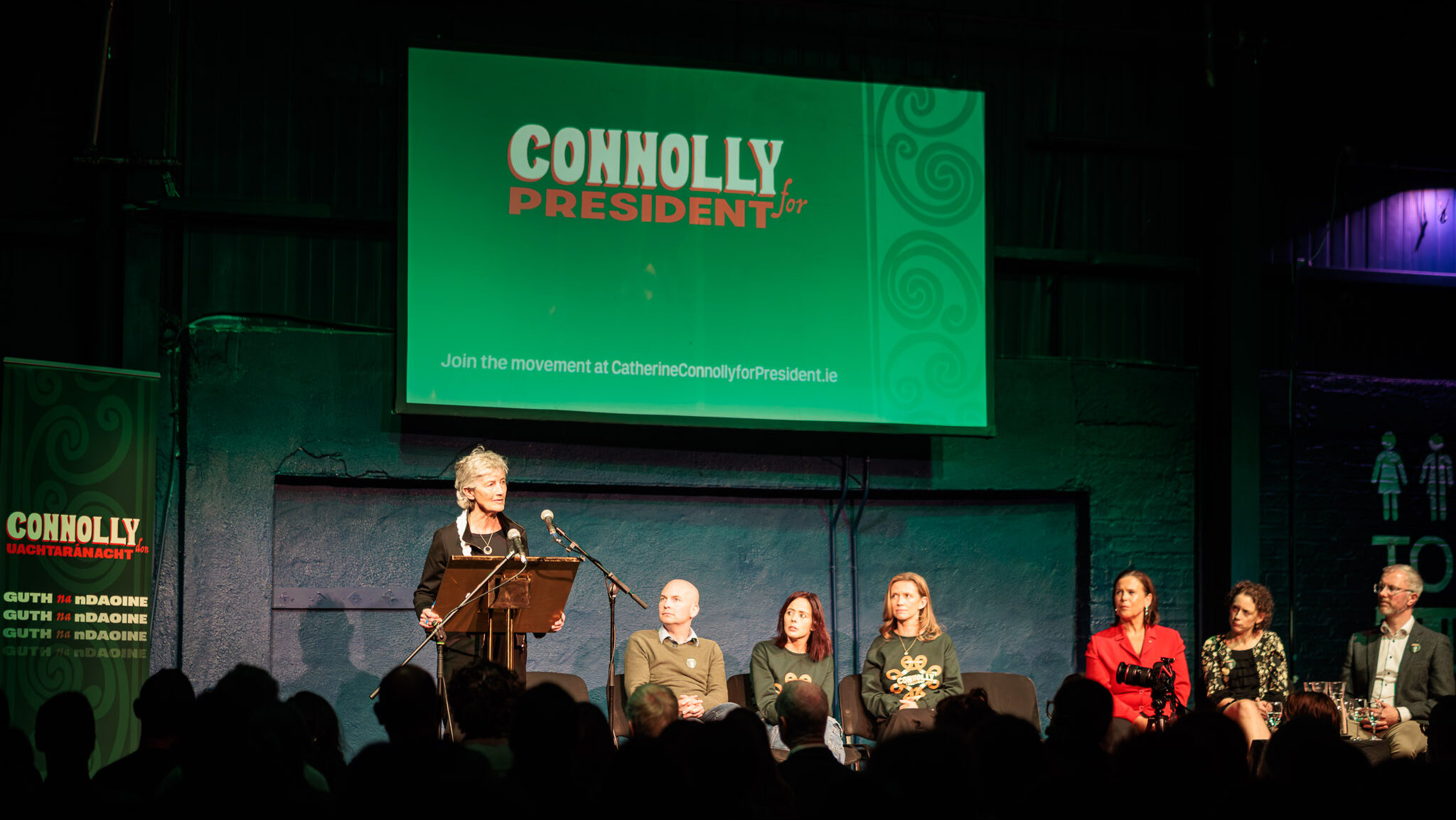
Catherine Connolly at campaign launch. Source: Connolly for President/X
Progressive Catherine Connolly will be the next president of Ireland, following a landslide victory in the election held on October 24. Securing approximately 64% of votes, she won by a wide margin against conservative candidate Heather Humphreys, despite attempts by mainstream media to discredit her. Connolly’s victory brings hope that the presidency will give voice to issues close to the majority of the population, including housing, Irish unity, and the genocide in Gaza.
Connolly’s bid was supported by major left and progressive parties, which united behind her while criticizing the policies of the governing Fianna Fáil and Fine Gael. “This was a historic election, perhaps a watershed moment in Irish politics, in which the combined opposition came together to take on Fianna Fáil and Fine Gael,” said Sinn Féin leader Mary Lou McDonald. “We represent a real, positive alternative to the stifling politics that has failed generation after generation.”
Read more: Welsh by-election shows far right isn’t the only alternative to establishment parties
Throughout the campaign, Connolly emphasized that, if elected, she would continue to speak out on crucial issues, including Israel’s genocide in Gaza. The Irish public has mobilized in mass numbers in solidarity with Palestine, with Connolly herself joining protest blocs led by Irish Lawyers for Palestine. Many in Ireland view the Palestinian struggle for liberation through the lens of their own historical experience of occupation, but mainstream political parties have failed to act in line with such public sentiment.
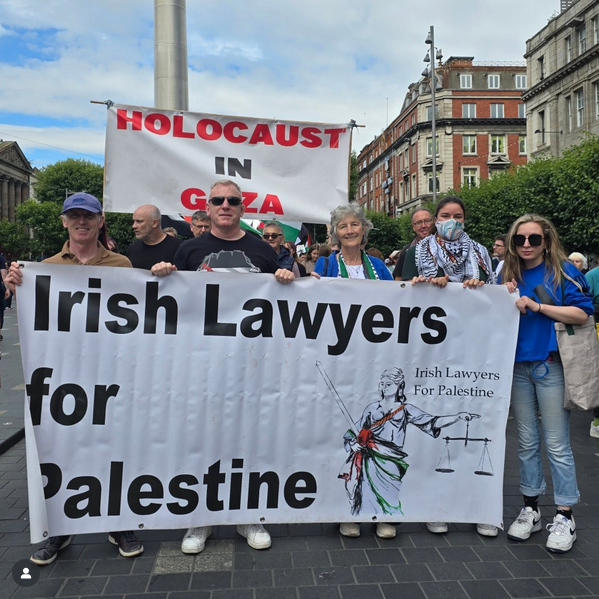 Catherine Connolly during a Palestine solidarity demonstration with Irish Lawyers for Palestine. Source: Irish Lawyers for Palestine/Instagram
Right-wing politicians and media outlets implemented what many view as smear attempts on Connolly for her expressions of solidarity with the Palestinian people shortly after October 7, 2023, but those attacks failed to gain traction. “Israel has committed genocide in Gaza,” Connolly repeated during the campaign. “The normalization of genocide is catastrophic for the Palestinian people, and it is catastrophic for humanity. History didn’t begin on October 7. I will stand in solidarity with the Palestinian people as long as I have breath in my body.”
Her outspoken support for Palestine drew acknowledgment from different parts of the solidarity movement, including from the band Kneecap, which has itself been targeted for its pro-Palestine stance in the United Kingdom. Connolly had previously attended Kneecap’s performances, saying that the group has been “a force for good and a force for encouraging people to use their voice, and a force for the Irish language.”
Read more: Artists speak up against genocide in Gaza at Europe’s music festivals
The president-elect is also a firm supporter of Irish neutrality and a vocal critic of militarization. On several occasions, she denounced Europe’s rearmament agenda, insisting that resources should be redirected toward policies promoting social justice. “I want to see the EU using its power to create societies that serve the people, not corporations and the arms industry,” Connolly said. “We need an EU that uses its powers to promote peace, inclusion, and a fair transition to a Europe free of fossil fuels.”
While on the campaign trail, Connolly warned that “any sensible person in Ireland would have to be concerned about the increasing money going into militarization” at the expense of essential services and social justice. Her stance against NATO and the arms trade earned her additional support from left figures such as former MEPs Clare Daly and Mick Wallace. Daly called Connolly “a voice for peace, humanity, and hope,” adding that her election was “a giant setback” for the establishment parties and media working to abolish the concept of neutrality.
Finally, Connolly’s victory has brought optimism for proponents of Irish unity. McDonald expressed hope that the coming presidency could mark the moment when a referendum on the issue is finally held. “It is likely that a referendum on Irish Unity will happen during Catherine’s Presidency, and the government needs to start preparing for it now,” she said following the results.
Positive reactions came from abroad as well. British MPs Jeremy Corbyn and Zarah Sultana congratulated Connolly, with Sultana calling her victory “a triumph for hope, solidarity, and a united Ireland.”